Oil used to come from somewhere you knew
For generations, cooking oil in India was pressed close to home. Groundnut across the Deccan and Gujarat, sesame in the south, coconut along the coast, mustard across the north and east. Families knew their oil by its colour and its smell, and each region cooked with the oil its own land produced.
Over the past few decades, that changed. Industrially refined oil, sold in packets and bottles, became the default in most homes. It was cheaper to make at scale, kept for months, and tasted of nothing in particular, so it suited every dish and every shelf.
What refining takes away
Refining is designed for yield and shelf life. Oil is typically drawn out with high heat and chemical solvents, then neutralised, bleached and deodorised at temperatures above 200 °C. What comes out is pale, odourless and uniform.
Along the way, much of what made the oil food is reduced: the natural colour and aroma of the seed, and part of the vitamin E and antioxidants it carried. Most families never chose that trade. It was simply what was on the shelf.
See cold-pressed and refined oil compared
Because every drop counts.
Taking health back into our own hands
The oil a family cooks with every day deserves the same care as any other food they buy. That is why I Care describes itself not as a business that found a gap, but as an answer to a health need.
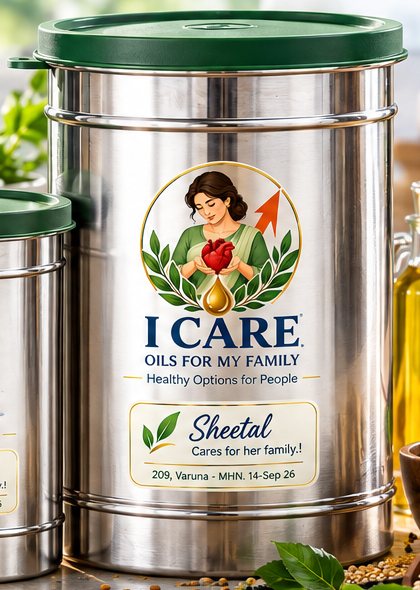
We press groundnut, sesame, coconut, mustard and sunflower oil from whole seeds using a modern cold-press machine. There are no solvents, no bleaching, no deodorising, and nothing is added. Every tin carries a batch number, so the oil in your kitchen can be traced back to its pressing.
We are starting in Hyderabad, delivering to families here first. The ambition is bigger than one city: pure, unrefined oil as a normal, everyday choice for every Indian home.